

The Supply Chain Is the Attack Surface
The most damaging enterprise security incidents of the past decade did not begin with a breach of the target organization's perimeter. They began in the supply chain - compromised software updates, tampered vendor systems, counterfeit components, and falsified certification documents that moved through procurement processes without anyone questioning their integrity.
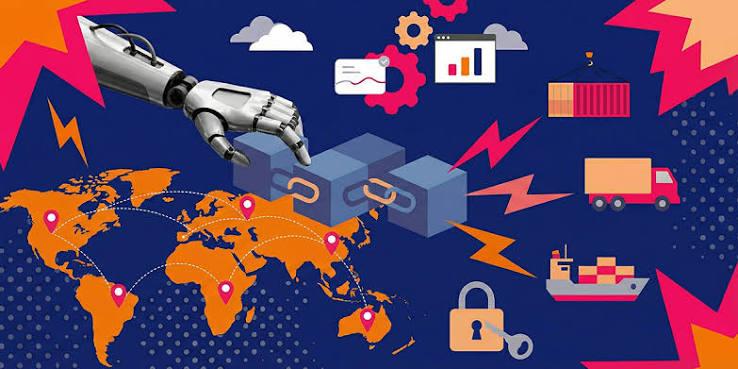
In 2026, the global blockchain supply chain market has reached $5.23 billion, reflecting the scale of demand for technology that can deliver verifiable, tamper-evident records of supply chain data. This is not speculative adoption driven by hype. It is operational demand driven by regulatory pressure, insurance requirements, and the hard lessons of incident post-mortems that consistently point to supply chain as the point of entry.
But blockchain-based supply chain integrity is not primarily a technology story. It is a governance story. The question is not whether organizations will adopt cryptographic verification for supply chain data - it is whether they will do so before or after their next significant incident.
Why Traditional Supply Chain Audits Break Down
The traditional approach to supply chain assurance relies on a combination of contractual requirements, periodic audits, questionnaire-based assessments, and certification checks. For the complex, multi-tier, internationally distributed supply chains that characterize regulated industries today, it is fundamentally insufficient.
The core problem is temporal: a periodic audit verifies compliance at a point in time. But supply chains are dynamic. A supplier certified compliant in January may have experienced a significant security incident in March. A component certified as authentic may have been counterfeited in transit. A software bill of materials verified at deployment may have drifted through subsequent updates.
This gap has real consequences. NIS2 Article 21 explicitly requires organizations to manage cybersecurity risks in supply chains. DORA mandates comprehensive third-party ICT risk management. The EU Cyber Resilience Act (CRA), now in implementation, places security requirements on connected products throughout their lifecycle. Each of these frameworks is pointing in the same direction: supply chain assurance must be continuous, not periodic.
How Cryptographic Anchoring Changes the Supply Chain
Cryptographic anchoring solves the temporal problem by creating a permanent, tamper-evident record of the state of any supply chain asset at the moment of verification - and continuously thereafter.
When a supplier delivers a component, software package, certification document, or data asset, that delivery is cryptographically fingerprinted and anchored to an independent public ledger. The fingerprint is a unique hash that reflects the exact state of the asset at that moment. Any subsequent modification - however subtle - produces a completely different fingerprint. The divergence is instantly detectable by any party with access to the original sealed record.
This means that a software vendor cannot silently push a modified update after certification. A document cannot be backdated. A configuration cannot be altered between audit and deployment. The sealed record is the ground truth, and it is maintained independently of any single party in the supply chain.
- Software integrity verification - Cryptographically verify that software packages, updates, and firmware delivered by suppliers match their sealed specifications. Any deviation is flagged before deployment.
- Certification document authenticity - Anchor supplier certifications, compliance attestations, and audit reports so that their authenticity can be independently verified at any time.
- Component provenance tracking - Create an immutable record of the origin, handling, and custody of physical or digital components through the supply chain.
- Third-party data integrity - Verify that data assets delivered by third-party providers - databases, API outputs, training datasets - have not been modified since their delivery.
- Continuous third-party posture monitoring - Maintain an ongoing, verifiable record of supplier security posture, updated continuously rather than at periodic audit intervals.
Building Supply Chain Integrity That Meets Regulatory Standards
The regulatory landscape is converging on a clear standard: supply chain risk management must be demonstrable, not just documented. Organizations that can produce a continuous, cryptographically verified audit trail of their supply chain security posture are well-positioned for NIS2, DORA, and CRA compliance. Those relying on periodic questionnaires and point-in-time certifications will face increasing difficulty satisfying supervisory requirements.
ROOTKey's verifiable trust infrastructure provides the cryptographic anchoring layer that turns supply chain assurance from a periodic exercise into a continuous, machine-verifiable capability. By integrating ROOTKey into your supplier onboarding and ongoing monitoring processes, you create an audit trail that regulators can verify independently.
Explore how ROOTKey supports supply chain integrity and start building verifiable supplier trust today.
Erhalten Sie Einblicke zur Cyber-Resilienz per E-Mail
Praktische, auditfähige Hinweise zu Datenintegrität, Compliance und Kontinuität – sobald wir veröffentlichen.