


A Mandatory Deadline Is Coming for Every EU Member State
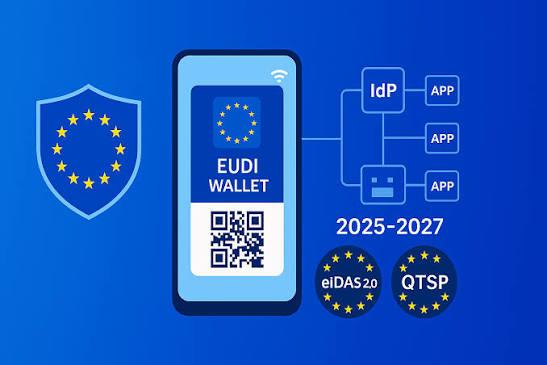
By December 2026, all 27 EU member states must make the EU Digital Identity Wallet (EUDI Wallet) available to citizens and residents. This is not a voluntary initiative or a pilot program. It is a legal obligation under eIDAS 2.0 (Regulation EU 2024/1183), which entered into force on May 20, 2024, and is now in active rollout.
For regulated enterprises - particularly those operating in financial services, healthcare, energy, transport, and digital infrastructure - the implications extend well beyond providing a login option. EUDI Wallet integration will reshape how organizations handle identity verification, KYC/AML compliance, electronic signatures, and cross-border service delivery.
With six months until the member state rollout deadline, organizations that have not yet begun preparation are already behind. This guide explains what eIDAS 2.0 requires, which sectors are most affected, and what concrete steps enterprises should take now.
What eIDAS 2.0 Changes - and What It Replaces
The original eIDAS regulation (2014) established a framework for electronic identification and trust services - digital signatures, electronic seals, timestamping, and website authentication. It worked, but it created a fragmented landscape where national eID systems were not always interoperable and adoption varied widely across member states.
eIDAS 2.0 overhauls this with a unified EU Digital Identity Wallet - a standardized, government-issued digital identity infrastructure that citizens can use across all public and private services in the EU. Unlike its predecessor, eIDAS 2.0 explicitly mandates that regulated private sector relying parties - entities providing services like banking, insurance, transport, and healthcare - must accept EUDI Wallets for identity verification.
This is the critical shift for enterprises: acceptance is not optional for regulated relying parties. Organizations that do not build the technical and procedural capacity to verify EUDI Wallet credentials will be non-compliant.
- May 2024 - eIDAS 2.0 Regulation enters into force across the EU.
- 2025-2026 - Member states implement national infrastructure; pilot EUDI Wallets deployed in multiple countries.
- December 2026 - All 27 member states must make EUDI Wallets available to citizens and residents.
- 2027 and beyond - Regulated relying parties in mandatory sectors must accept EUDI Wallet-based identification and authentication.
Which Sectors Face the Highest Urgency
eIDAS 2.0 mandates EUDI Wallet acceptance across several regulated verticals. Organizations in these sectors face the most immediate preparation requirements:
Financial services and banking - KYC/AML processes, account opening, and payment authorization will all need to support EUDI Wallet-based identity. Financial institutions with cross-border EU customer bases will see the most significant operational impact.
Healthcare - Patient identification, prescription issuance, and cross-border healthcare services will migrate toward wallet-based verification. Healthcare providers managing sensitive patient data must ensure their identity infrastructure aligns with GDPR while adopting eIDAS 2.0 standards.
Energy and utilities - Smart grid operators, energy providers, and metering infrastructure operators will need to support authenticated, verifiable interactions with regulated counterparties.
Digital infrastructure and cloud services - ICT providers serving regulated sectors will need to demonstrate eIDAS 2.0 compatibility as a condition of continued contracts in many cases.
What Regulated Organizations Must Do Now
The six months before the December 2026 deadline are not enough to build EUDI Wallet integration from scratch if your organization starts planning in November. Enterprises that will be ready have started already. Here is the practical framework:
1. Map your relying party obligations. Determine whether your sector and the specific services you provide fall under mandatory acceptance requirements.
2. Audit your identity and authentication infrastructure. EUDI Wallet integration requires a Wallet Connector API that can verify wallet-issued credentials. Assess your current identity provider stack and identify integration gaps.
3. Align with your data integrity framework. EUDI Wallet credentials contain sensitive personal and organizational data. The integrity and authenticity of records derived from wallet-based interactions need to meet the same verifiable standards as other regulated data assets.
4. Plan for cross-border scenarios. If your organization operates across EU member states, verify that your integration will function correctly across different national wallet implementations.
5. Document your compliance pathway. Regulators will expect relying parties to demonstrate proactive preparation. Maintaining a clear, timestamped record of your integration progress is defensible evidence.
ROOTKey's verifiable trust infrastructure supports the data integrity layer that EUDI Wallet deployments depend on - ensuring that the records derived from wallet-based interactions are tamper-evident and audit-ready from the moment of creation.
Start building your verifiable digital identity foundation with ROOTKey.
Recibe ideas sobre ciber-resiliencia en tu correo
Orientación práctica y lista para auditorías sobre integridad de datos, cumplimiento y continuidad, según publicamos.